

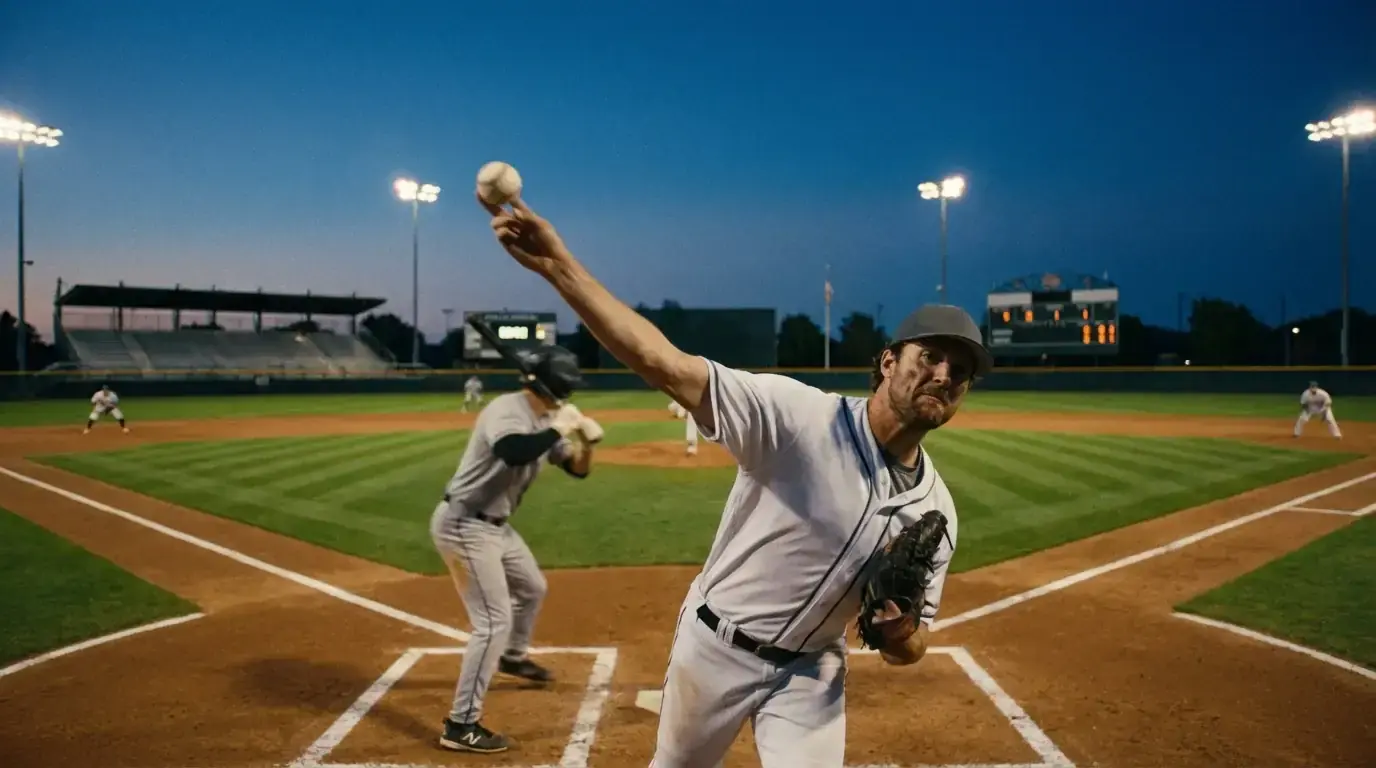
Three years ago I stumbled into NRFI betting almost by accident. I had been tracking first-inning ERA splits for a pitching model and noticed something odd — the market was consistently mispricing certain ace-versus-ace matchups. That discovery turned a side project into one of the most reliable edges in my betting portfolio, and it is one of the simplest MLB markets a UK bettor can learn.
NRFI stands for No Run First Inning. You are betting that neither team scores in the top or bottom of the first inning. It settles fast — usually within fifteen minutes of first pitch — and it strips away almost every variable that makes full-game MLB betting complicated: bullpen depth, managerial decisions, late-inning fatigue. What remains is a clean duel between two starting pitchers and the top of each batting order. With 2,430 regular-season games spread across six months, the volume of NRFI opportunities is enormous, and that volume is exactly what makes the market exploitable for anyone willing to do the homework.
What NRFI Means and How the Market Is Priced
I remember explaining NRFI to a mate who bets football every weekend. He looked at me like I was speaking a different language. The concept, though, is dead simple once you see it through a football lens: imagine betting on 0-0 at the end of the first ten minutes. That is essentially what NRFI does for baseball.
Bookmakers price NRFI as a two-way market — NRFI (no run scored by either side in the first inning) or YRFI (yes, at least one run scored). The odds typically range from 1.60 to 2.10 in decimal format depending on the pitching matchup. When two elite starters face off, NRFI might be priced around 1.65, implying roughly a 60% probability. When two volatile pitchers or potent lineups collide, the market flips and YRFI becomes the favourite.
The pricing engine behind NRFI lines leans heavily on starting pitcher data, but most recreational bettors do not dig beyond the surface. They see a name — say, a Cy Young winner — and assume NRFI is automatic. The reality is more nuanced. A pitcher’s overall ERA tells you very little about first-inning outcomes specifically. What matters is how that pitcher performs with zero runners on base, facing a lineup for the first time through the order, in the opening frame where adrenaline and sequencing patterns differ from mid-game innings. That gap between perception and specificity is where the edge lives.
On UK-licensed platforms, NRFI markets are typically listed under “Inning Betting” or “First Inning Specials.” Not every operator carries them for every game, so it pays to check availability a few hours before first pitch when the full slate is loaded.
Pitcher Metrics That Drive NRFI Results
If someone asked me to narrow NRFI analysis down to a single number, I would pick first-inning ERA — but I would never stop there. First-inning ERA captures exactly what the market is about, yet sample sizes within a single season can be thin. A pitcher who has made 30 starts has only 30 first innings of data that year. That is where supporting metrics fill the gaps.
Start with K/BB ratio in the first inning. Pitchers who strike out hitters at a high rate and walk very few are the safest NRFI anchors because they limit baserunners before damage can happen. A first-inning K/BB above 3.0 is what I look for as a baseline filter. Next, check first-time-through-the-order splits, often abbreviated as TTO1. Some pitchers are devastating the first time they face a lineup but unravel on the second and third pass. For NRFI purposes, that second-pass decline does not matter — you only need them to be sharp for one inning.
Ground-ball rate adds another layer. A pitcher who induces grounders limits extra-base hits, which limits big first innings. A GB% above 48% paired with strong K numbers is a reliable NRFI profile. Historically, moneyline favourites win around 58-62% of MLB games, but favouritism alone does not predict first-inning scoring — two closely matched teams can both have elite starters, producing the best NRFI conditions despite a tight overall line.
One filter I always apply is rest days. A pitcher returning from a short rest, or one making his first start after the All-Star break, tends to have erratic command in the opening frame. Those are NRFI spots I avoid regardless of how good the numbers look on paper.
Ballpark and Weather Filters for First-Inning Scoreless Outcomes
Last July I placed an NRFI bet at Coors Field and watched a leadoff triple land in the right-field gap before I had even finished my tea. That was a lesson I only needed to learn once. Ballpark context changes everything in this market.
Coors Field in Denver sits at 5,280 feet above sea level. The thin air carries the ball farther, and breaking pitches lose movement. First-inning run rates at Coors consistently sit 15-20% above the league average. Unless both starters have a proven Coors-specific track record, I leave those games alone for NRFI purposes. On the opposite end, pitchers’ parks like Oracle Park in San Francisco and Petco Park in San Diego suppress first-inning scoring, making NRFI hits more frequent even when the pitching matchup is only average.
Weather matters too, but not all weather is equal. Temperature is the biggest factor — when game-time temperature exceeds 29 degrees Celsius, the ball flies farther and offensive output rises. Wind direction at the specific ballpark amplifies or negates that effect. Wind blowing out to centre field at Wrigley in Chicago, for instance, can turn a routine fly ball into a first-inning run. Wind blowing in off Lake Michigan does the opposite. I check weather reports roughly two hours before first pitch, when conditions are stable enough to trust.
Humidity plays a subtler role. High humidity actually makes air slightly less dense, which can marginally increase ball carry, but the effect is smaller than temperature and wind. I treat humidity as a tiebreaker rather than a primary filter. When temperature, wind, and park factors all align favourably — moderate temperature, wind blowing in, a pitcher-friendly park — NRFI becomes one of the highest-percentage plays on the board.
One more variable worth noting: day games versus night games. Day games at open-air parks, particularly early-season afternoon starts when temperatures are cool, tend to produce lower first-inning scoring. The sun angle can also affect hitters’ visibility in certain parks. It is a small edge, but small edges compound over a 162-game schedule, and that compounding effect is what makes MLB beat bets a volume game rather than a highlight reel.
