

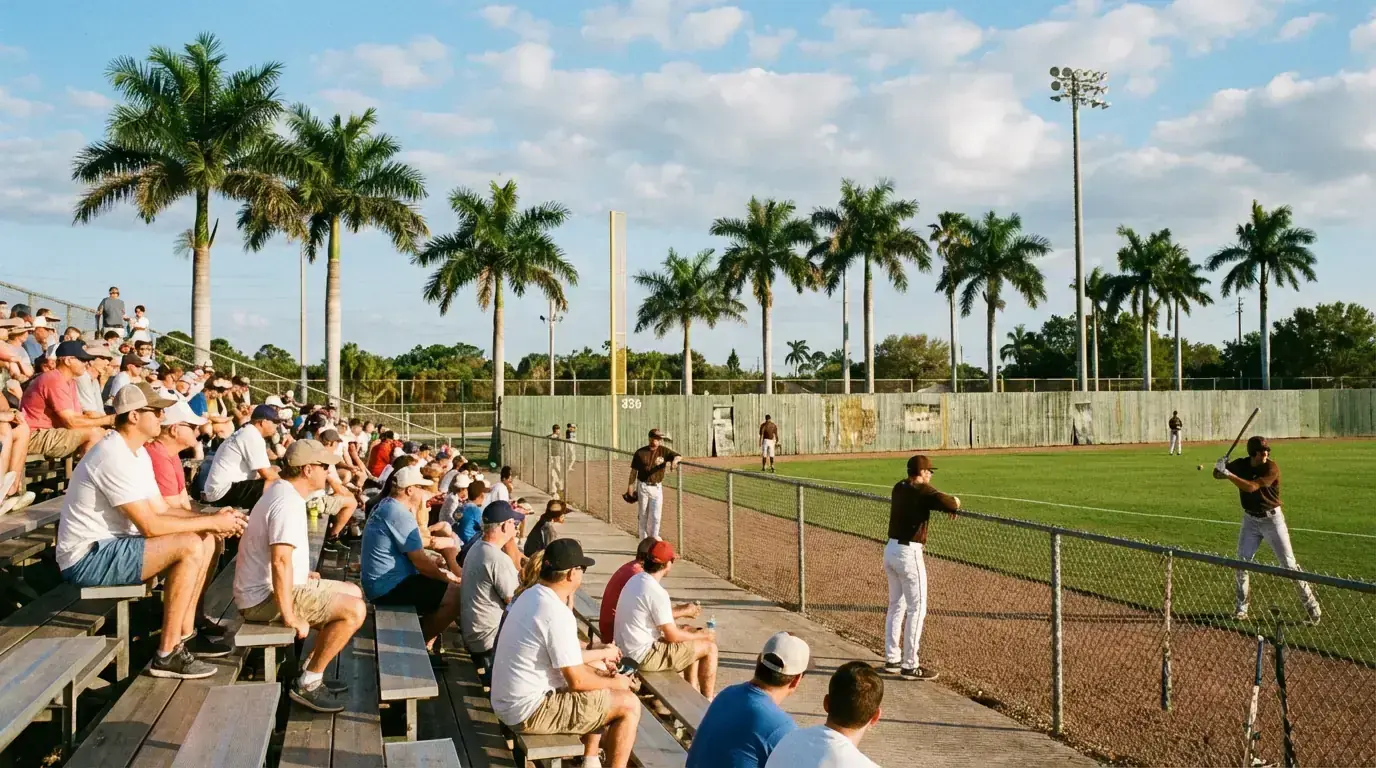
Every February, the baseball world descends on Florida and Arizona for spring training. Exhibition games start, box scores appear, and a certain type of bettor gets very excited very quickly. I was that bettor once. I wagered on spring training games during my second year, convinced that a team winning 8-2 in a Grapefruit League matchup meant something. It did not. That money was gone, but the lesson — that spring training games are nearly useless for direct betting but extraordinarily useful for futures signals — has been one of the most profitable realisations of my career.
Why Spring Training Results Are Unreliable for Betting
Spring training games are not real baseball. Managers use them to evaluate players, test lineups, and build pitch counts — not to win. A team’s starting pitcher might throw three innings and exit regardless of the score. The first baseman you bet on might play four innings before a minor-league call-up takes his place. Half the players in the lineup on any given day might not make the opening-day roster.
The statistical environment is distorted beyond recognition. With 2,430 regular-season games producing reliable data, spring training’s 25-30 exhibition games per team generate noise rather than signal. Hitters face pitchers who are not throwing at full effort. Pitchers face lineups that include prospects and non-roster invitees alongside regulars. The sample sizes are tiny, the conditions are artificial, and the incentive structure is completely different from a regular-season game where wins and losses count.
I do not bet on spring training games, full stop. The juice is typically higher than regular-season markets (bookmakers know the outcomes are unpredictable), the information asymmetry favours insiders who know which players will sit after three innings, and the results have essentially zero predictive value for the regular season. If you want action during February and March, use that energy to research futures markets instead.
Roster Moves, Rotation Order, and Futures Signals
What spring training does provide is a window into team construction for the upcoming season. This is where the value lives — not in game results, but in the organisational decisions that become visible during the pre-season.
Rotation order is the first signal I watch for. Most managers announce their opening-day starter and the initial rotation sequence during the final week of spring training. This information directly affects futures pricing because it tells you who pitches the most important early-season games and how the workload will be distributed. A team that slots a promising rookie into the third starter role instead of a veteran signals confidence that can shift division-winner odds.
Roster battles are the second signal. Spring training decides the final roster spots — the fifth starter, the last bullpen arm, the bench players. These decisions affect team depth and therefore overall win projections. A team that emerges from spring training with a deep bullpen and two legitimate fifth-starter options is better positioned for the 162-game marathon than one scrambling to fill its roster spots.
Caesars Sportsbook’s Joey Biggio noted the surprising volume of money on the Mariners for the AL pennant heading into 2026, alongside less-than-expected interest in the Blue Jays. Those pre-season sentiments often crystallise during spring training as bettors react to roster announcements and exhibition performances. The contrarian play is to look past the exhibition results and focus on the structural changes: did a team add a frontline starter? Did they lose a key reliever to injury? Did a prospect earn a roster spot who was not in the opening-day projections? These changes affect true win probability in ways that the public — distracted by Grapefruit League box scores — often misses.
Using the Pre-Season Window for Early Futures Value
The pre-season window — from late February through opening day in late March — is the widest-odds environment for MLB futures. Uncertainty is at its peak, which means bookmakers set their opening lines with wider margins to protect against the unknown. That width creates opportunity for bettors with a clear thesis.
I approach pre-season futures with three criteria. First, has the team made meaningful off-season additions (players, coaches, front-office personnel) that improve their projected win total by three or more games? If so, the futures price might not yet reflect the full impact. Second, is the team’s division weak enough that even a modest improvement makes them a contender? Division winner markets are often the best pre-season value because the field is small. Third, is the public sentiment around the team negative despite positive underlying changes? Negative sentiment depresses the price, creating value for the informed buyer.
Timing matters within the pre-season window. I typically place my initial futures bets in late February, before spring training results begin influencing public perception. If nothing changes during March, I hold the position. If a significant injury or roster change occurs, I reassess and either add to the position at a new price or let it stand. The worst approach is waiting until opening day, when the pre-season uncertainty has been resolved and the market has tightened to its most efficient pre-season state.
One final note: spring training is also when I set up my full-season tracking systems. Spreadsheets, model inputs, bookmaker accounts funded and ready, daily routine drafted. The work you do in February and March — before a single regular-season bet is placed — sets the foundation for six months of disciplined MLB betting. Preparation, not prediction, is what separates a productive pre-season from a wasted one.
