

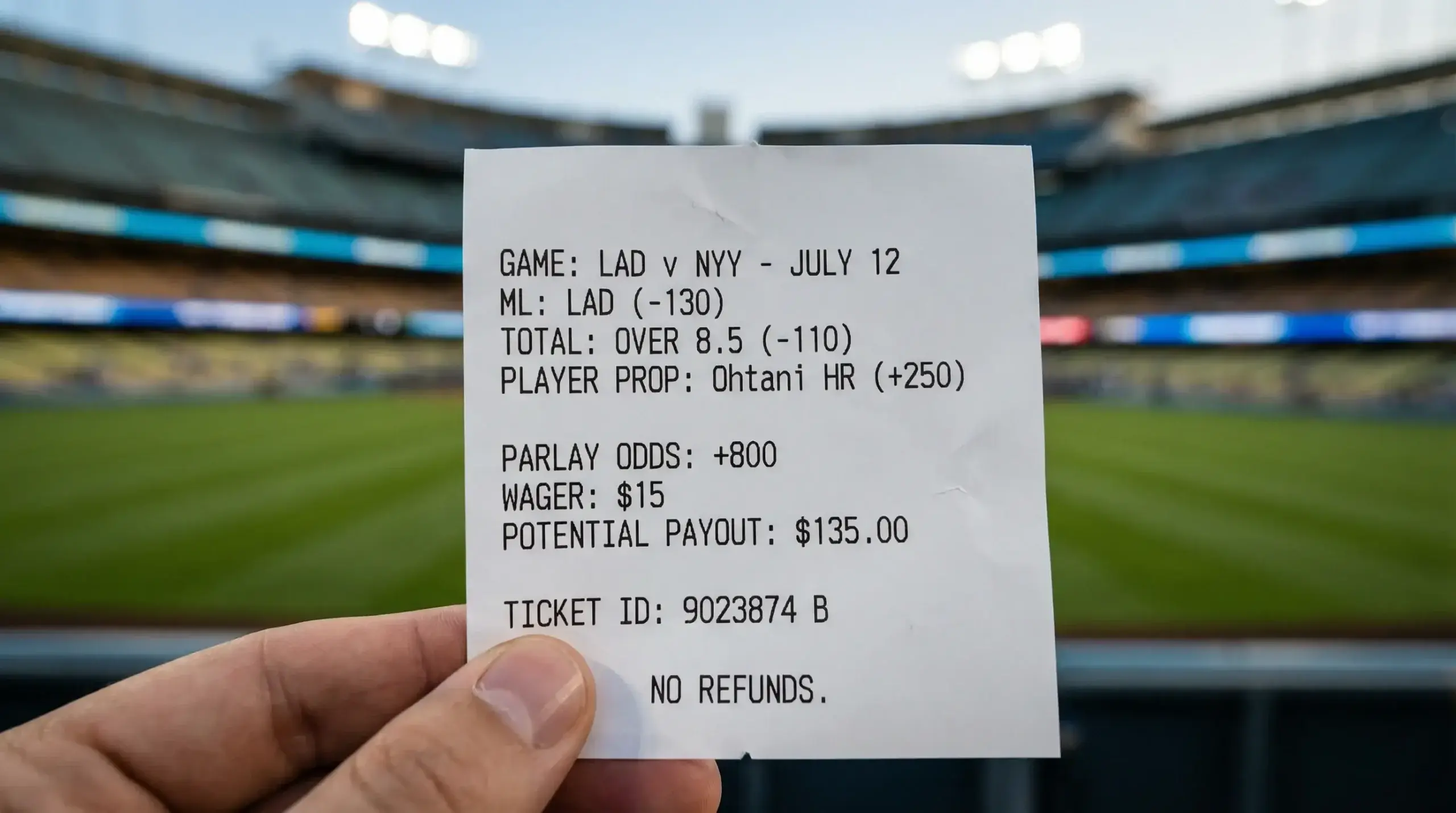
Same-game parlays have exploded in popularity because they let you tell a story with a bet. Instead of just picking a winner, you are predicting how the game unfolds — this team wins, this pitcher strikes out seven, the total stays under nine. The problem is that most bettors construct their SGPs based on narratives rather than correlation logic, and the difference between those two approaches is the difference between entertainment and edge.
I started building SGPs in 2022 when UK bookmakers began offering them consistently for MLB. The early results were terrible because I was combining legs that felt connected but were not statistically correlated. Once I began testing which combinations actually co-occur at rates higher than independence would predict, my SGP results improved dramatically.
Which MLB SGP Legs Actually Correlate
Correlation in an SGP context means that two outcomes are more likely to happen together than their individual probabilities would suggest. True correlation creates value because the bookmaker typically prices each leg independently and then adds a margin to the parlay — if the legs actually reinforce each other, the true combined probability is higher than the independent-leg calculation implies.
The strongest correlation in MLB SGPs: team moneyline and game total under. When a team wins behind dominant pitching, scoring tends to be suppressed on both sides. The winning team did not need many runs, and the losing team was shut down. Combining “Team A to win” with “under 8.5 total runs” captures this relationship. The legs move together — a dominant pitching performance makes both outcomes more likely simultaneously.
The second reliable correlation: pitcher strikeout over and game total under. A pitcher who is recording a high number of strikeouts is typically dealing — hitting his spots, getting batters to chase, and generating weak contact when the ball is put in play. High-strikeout outings suppress scoring. Pairing “Pitcher X over 6.5 Ks” with “under 8.5 runs” exploits this positive correlation.
Negative correlations — outcomes that are unlikely to happen together — are equally important because they identify legs you should never combine. A team winning by a large margin and the game going under is a weak pairing because blowouts often involve high scoring by the winning side, pushing the total up even if the losing side is shut out. Similarly, combining a batter’s “anytime home run” with “under 7.5 total” is contradictory — home runs add to the total, making the under less likely.
I test correlation empirically rather than relying on intuition. For any leg combination I am considering, I look at historical co-occurrence rates: when Leg A hits, how often does Leg B also hit? If that rate exceeds what independent probabilities would predict by more than 5%, I consider the legs genuinely correlated and worth pairing.
Building an SGP: Selecting Legs That Reinforce Each Other
My SGP construction follows a three-step framework. Start with a game thesis — a single sentence describing how you expect the game to play out. “The Dodgers’ ace dominates, the Dodgers win, and the total stays low.” Then select legs that express that thesis. Dodgers moneyline, pitcher strikeout over, game under. Each leg reinforces the others.
Keep SGPs to two or three legs maximum. Every additional leg adds margin that erodes expected value, and even correlated legs are not perfectly correlated. A three-leg SGP with genuine correlation can be +EV. A five-leg SGP almost never is, regardless of how logical the narrative sounds, because the compounding margin overwhelms the correlation benefit.
Mix market types rather than stacking the same market. Combining a moneyline with a total and a player prop creates more correlation opportunities than combining three player props, because player props from different stat categories (strikeouts, hits, home runs) have low correlation with each other unless they are linked through a common game-state driver.
Three SGP Traps and How to Avoid Them
The first trap is narrative bias. You build a beautiful story — the ace pitcher dominates, the cleanup hitter goes deep, the team wins by three — and it sounds so logical that you forget to check whether those outcomes are actually correlated. Pitcher dominance and batter home runs are only weakly connected unless the home run comes from the other team. Test the correlation before trusting the narrative.
The second trap is margin blindness. The US sports betting market handled roughly £165 billion in 2025, and a substantial portion of bookmaker profit comes from parlay margins. SGP margins are typically higher than standard parlay margins because the bookmaker adds an additional surcharge to account for the correlation they know exists. That surcharge can eat through your edge entirely. Before placing an SGP, calculate what the parlay would pay if priced at independent-leg odds, compare it to the SGP price offered, and check whether the margin is acceptable.
The third trap is overuse. SGPs are exciting, which makes them psychologically addictive. A losing streak on SGPs can erode your bankroll faster than a losing streak on straight bets because the zero-or-hero payout structure means every loss is a total loss. I cap my SGP exposure at 3% of my total monthly MLB bankroll and treat them as a supplement to my straight bets, not a replacement. Discipline in MLB betting means knowing when a tool is being used for edge and when it is being used for entertainment — and being honest about the difference.
